The vast bulk of respondents in FT-Booth poll say the central bank should lift borrowing costs in a bid to tame inflation.
Read Article
The William R. Rhodes Center for International Economics and Finance
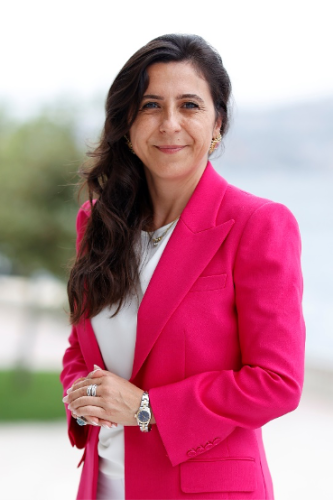
Sebnem Kalemli-Ozcan
Director of the William R. Rhodes Center for International Economics and Finance, William R. Rhodes ’57 Professor of International Economics, Schreiber Family Professor of Economics at Brown University, Director of the Global Linkages Lab
Biography
Şebnem Kalemli-Özcan's research sits at the intersection of international macroeconomics, global finance, and production networks, with a strong emphasis on micro-level data. She studies how capital flows, risk premia, and financial frictions shape global business cycles and the transmission of shocks across countries. A hallmark of her pioneering work is the use of granular firm-, bank-, and security-level datasets (including ORBIS, credit regiteries from Turkey, Spain and Chile, administrative portfolio data from the U.S. TIC and Euro Area SHS, and multinationals production records) to quantify the mechanisms behind international financial integration, cross-border bank lending, and global value chains. Her recent work examines how tariffs, geopolitical risk, and policy uncertainty propagate through multi-country, multi-sector models, influencing inflation, productivity, and asset prices. She has also contributed to venues like Jackson Hole Symposium with influential research on the policy making on the internatinal spillovers of US monetary policy, capital flows, international arbitrage deviations, expectations of exchange rate fluctuations, the role of the U.S. dollar in the international monetary system, and emerging-market vulnerabilities.
Recent News
Federal Reserve Chairman Kevin Warsh has said the decision to leave interest rates unchanged wasn't a sign of inertia at the central bank, which is committed to tackling inflation. Brown University Professor of International Economics Sebnem Kalemli-Ozcan breaks down how markets are interpreting the signals.
Read Article
Center for Economic Policy Research | Vox EU
Resilience is a network property: Europe’s integration test for 2050 (by Sebnem Kalemli-Ozcan)
Europe is converging on a definition of economic security as reduced dependence – de-risking, reshoring, buying European. This column argues that the definition is mistaken. Three decades of evidence on financial and production networks shows that resilience is a property of a node’s position in the network – the depth, diversity, and quality of its connections – not of the number of connections it has severed for self-sufficiency. Applying this test to critical input supply chains such as energy and defense – with Turkey, the EU’s largest customs union partner, as the defining case – the author argues that Europe passes the initiative’s ‘Singapore test’ only if it treats integration depth, rather than self-sufficiency, as the union’s security variable.
Read Article
Debates about geopolitical fragmentation always revive the late economist Robert Mundell’s dream of a single world money. But participants should be mindful of the euro’s real-world experience over the past quarter-century.
Read Article
Access Professor Sebnem Kalemli-Ozcan's written remarks on Financial and Trade Globalization, Its Future, and the Mundellian Vision and what can we learn from Mundell for staying resilient under geopolitical shocks here.
Read Article